
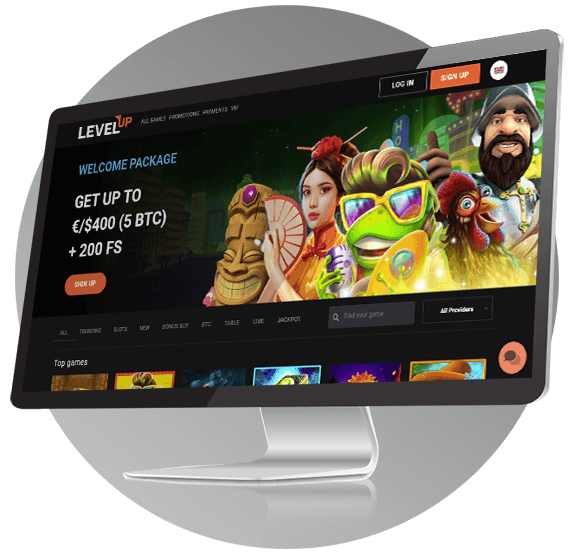
I used to think problem gambling involved dramatic losses or financial ruin, but I’ve learned that the earliest signs are far quieter. As someone who enjoys the entertainment Level Up Casino delivers, I’ve become much better at detecting when a harmless hobby starts to slip. The immersive world of online slots and live dealer tables can blur the line between recreation and compulsion surprisingly fast. Living in Switzerland, where federal gambling legislation pushes operators to provide strong player protection tools, I’m thankful that Level Up Casino’s responsible gambling features let me set real boundaries. Here, I want to share the personal warning signals I now watch for and the steps I take to keep my play healthy, intentional and genuinely fun.
1) Identifying Problem Gambling: The True Signs
Problem gambling isn’t a single catastrophic event; it is a slow loss of control that frequently masks itself with excuses. In my case, it started with an rising fixation on my next play and an urge to recoup even small losses quickly. The Swiss term “pathologisches Spielen” is defined as an impulse control disorder, and experts emphasise that the disorder can develop long before an individual faces financial ruin. I have learned that trying to recover losses, spending more time gambling than planned, and experiencing anxiety when I cannot play are early indicators. The responsible gambling section at Level Up Casino outlines these patterns clearly, and doing an honest self-check enabled me realize that my harmless fun was becoming emotionally motivated. Catching that shift early gave me the chance to reset before the behaviour turned into a deep habit.
3. Financial Red Flags That Point to a Transition in Control
I once believed my spending was okay because I didn’t overlook bill payments, but I overlooked smaller leaks. I started excusing a “final” deposit after my balance hit zero, and I’d psychologically recast gambling losses as normal entertainment expenses even when they clearly went beyond what I’d comfortably spend on a dinner in Geneva. Those tiny decisions added up. When I finally reviewed my transaction history inside my Level Up Casino account, the monthly total was nearly forty percent higher than I’d estimated. The realization was hard but necessary. Since then, I’ve treated every deposit like the price of a cinema ticket: once it’s gone, the experience is over. I also separate my gambling money from my household budget, which allows me spot any slow increase in spending before it becomes a fundamental problem.
5. Personal and Connection Indicators of Trouble
When I began evading inquiries about my evening arrangements or feeling guarded when my partner looked at my screen, I realized something had changed. Open communication is a fundamental value in our Swiss social circles, and I was subtly violating it. I’d call off a weekend hike in the Valais to remain at home with online roulette, and I’d downplay how often I gambled. That isolation creep is a common danger signal. I chose to engage my partner directly by sharing my monthly loss limit, transforming what was a concealed habit into something open. Now I have an accountability partner who avoids criticism but merely asks, “How did the week go?” If you realize you are creating alibis or feeling irritated when someone asks about your gambling, it’s worth stopping and assessing whether play is quietly crowding out the people who matter most.
9. Where to Find Professional Support in Switzerland
If my own restraints ever fall short and I feel I’ve surrendered the power to stop, I understand that Switzerland provides robust, confidential support. The SOS Spielsucht helpline at 0800 040 080 is free and accessible 24/7 in German, French and Italian. For French-speaking residents, the Centre du Jeu Excessif in Lausanne delivers specialised counselling, while the Fachstelle Glücksspiel in Bern serves the German-speaking community with therapy and prevention workshops. Having the phone number saved in my contacts normalizes the concept that reaching out is a marker of strength. Level Up Casino’s responsible gambling page shows direct links to these organisations so I rarely have to search alone in a period of distress.
Self-help groups like Anonyme Spieler, the Swiss branch of Gamblers Anonymous, conduct regular meetings in Zurich, Basel and Geneva. I’ve also saved the self-assessment test on spielsucht.ch, which I complete every few months as a personal check-in. Early intervention changes everything, and Swiss cantonal addiction services offer family counselling if someone I love is struggling. The entire support ecosystem, combined with the mandatory player protection tools built into Swiss-licensed casinos, comforts me that I am not forced to fight problem gambling in isolation. Whether I require a brief conversation or long-term therapy, there are definite, compassionate paths waiting.
Recognising problem gambling isn’t about labeling myself; it’s about noticing small shifts before they develop into damaging routines. By staying alert to emotional, financial and social warning signs, and by using the limits, time-outs and exclusion tools that Level Up Casino offers in full compliance with Swiss law, I can preserve play in its rightful place as entertainment. And whenever the signals become louder than my own defences, Switzerland’s professional helplines and treatment centres present a way back https://www.winnipegfreepress.com/business/2024/07/27/trump-calls-for-us-to-be-crypto-capital-of-the-planet-in-appeal-to-nashville-bitcoin-conference that is free, confidential and remarkably effective. The key is to begin the conversation early, with myself and, if needed, with the people and resources that can help.
7. Establishing Deposit Limits: A Step-by-Step Walkthrough
Setting a deposit limit on Level Up Casino is as simple as opening the responsible gaming section and choosing a daily, weekly or monthly cap. I initiated with a modest daily limit of twenty francs, since I desired to have a quick slot session without the risk of unnecessary top-ups. The platform prevents any deposit that would exceed the ceiling, and lowering the limit takes effect immediately, so I can tighten things further if I identify a stressful week ahead. I combine my deposit cap with a session timer to ensure I am not merely controlling money but additionally the window of time I spend. Since putting these layered limits in place, I’ve noticed I log in with a much clearer intention, and the post-session regret I previously carry into Monday mornings has faded completely.
8. Taking a Break: Time-Outs and Self-Exclusion Clarified
Sometimes a standard limit falls short, and I want complete distance. Level Up Casino allows me to activate a time-out for 24 hours, seven days or thirty days. During a break, I can’t log into my account, bet, or obtain marketing emails. I took a one-week break after realizing thinking about games during client meetings, and that separation gave me enough perspective to recalibrate. The login screen merely presented a gentle reminder of my break, which came across as encouraging rather than penalizing. A break is the optimal middle ground when I feel my habits changing but I’m not in crisis territory.
If I ever require extended protection, I can ask for voluntary exclusion for half a year or beyond. This option is also connected to the national Swiss self-exclusion register, meaning the ban can reach to all licensed gambling houses in the country. Level Up Casino’s support team guides me through the process, and as soon as the exclusion kicks in, it’s irreversible for the chosen period. I am aware of people who had a 6-month break and returned with a remarkably healthier attitude to gaming. When self-exclusion is active, any try to create a new account with the same personal details is stopped by the identity verification system, which offers an further measure of safety when my own judgment might be questionable.
2. The Emotional Warning Signs I Watch for When Playing
Emotional changes are often the first alarms I found to take seriously to heart. I realized I was progressively using Level Up Casino’s tables to avoid a tough workday in Zurich, thinking a few victorious hands would improve my mood. When losses struck, my frustration remained, making me irritable with people I cherished. The real red flag was the empty feeling after a session—not just disappointment, but a quiet sense of shame I’d conceal. Gambling had stopped being pleasurable and started appearing like an emotional crutch. I now maintain a simple note on my phone where I record how I felt before and after playing. If the “after” column regularly shows tension, remorse or a urge for a rapid win to feel okay, I understand it’s time to dial back and use the break tools.
4. The way Time Spent Gambling Turns into a Liability
I was honestly surprised how readily a intended thirty-minute slot session would extend into two or three hours. The aesthetic richness of the games at Level Up Casino made time feel fluid, and I’d skip my evening walk or postpone calls with friends simply to keep spinning. That concerned me because my quality of life was diminishing around gambling. I activated the built-in reality check, which pops up a gentle reminder every forty minutes. That simple nudge interrupts the trance and obliges me to consciously decide whether to continue. I also set a separate alarm on my phone so I’m not relying solely on the platform. If I find myself repeatedly overlooking the alert or negotiating for “just ten more minutes,” I acknowledge it as a strong sign that time has gained control over me.
6. Tools I Use at Level Up Casino to Ensure Play Safe
When I finally acknowledged I needed guardrails, I discovered that Level Up Casino’s responsible gaming panel is remarkably straightforward. Under Swiss licensing rules, operators must give players clear self-control tools, and here I can set deposit caps, loss limits, wager limits, session timers and cool-off breaks all from one screen. The dashboard took me less than three minutes to understand, and every limit I set applied instantly. I could also download my full betting and transaction history, which gave me a eye-opening but valuable overview. Rather than feeling restricted, I felt relieved because the decisions I made with a clear head were now protecting the version of me that might act impulsively later. These tools transformed gambling back into a planned activity instead of a reaction.
Deposit Limits, Loss Limits, and Wager Limits in One Location
I now utilize three different caps in combination. My daily deposit limit holds casual slot sessions small, casino level up, my weekly loss limit of one hundred francs corresponds to what I’d spend on a night out in Lausanne, and my wager limit stops me from scaling up bets after a lucky streak. The loss limit in particular has been a mental lifesaver because it obliges me to stop even when I feel convinced the next spin will turn things around. All three limits are located on the same page inside my account, and I can adjust them lower whenever I like. Swiss regulation mandates that any request to raise a limit only takes effect after a twenty-four hour en.as.com cooling-off period, which has prevented me from making a panicked change after a frustrating session more than once.
How I Configure a Weekly Loss Limit That Seems Right
I took a seat on a quiet Sunday, reviewed what I could comfortably part with in seven days without stress, and selected CHF 150 as my top weekly loss. Inside the responsible gambling tool, I chose the weekly loss limit setting, typed the amount, and verified. The system instantly acknowledged the change and presented a distinct notification that trying to lift the cap would be postponed by a complete day. That small delay functions like a circuit breaker. Two times I’ve attempted to boost the limit after a bad run, and by the time twenty-four hours passed, the urge had disappeared and I preserved my original boundary. If I ever hit my loss cap mid-week, I log out and go for a walk along the Limmat, grateful that the tool acts as my rational self when my emotions desire otherwise.

Leave A Comment